TumblrPics.com
HOME
DMCA
Live
Gallery
Viewer
Classics History
joyoussquid
antoni belladonna
eyestrain maybe
carnacki
evelynn hyde
LIVE
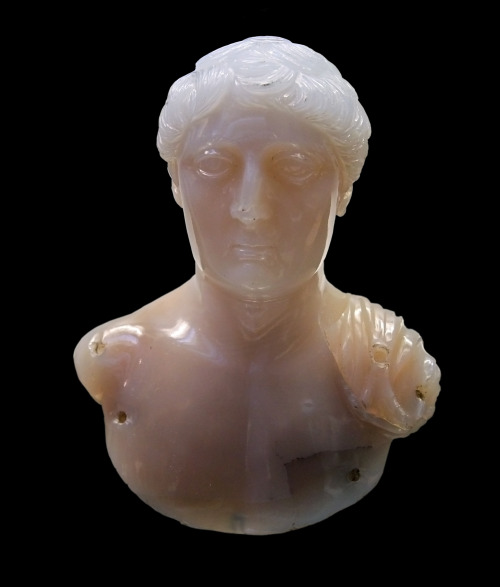
Ancient Roman chalcedonyappliqué depicting the bust of a young man in a cloak. Artist unknown; ca.
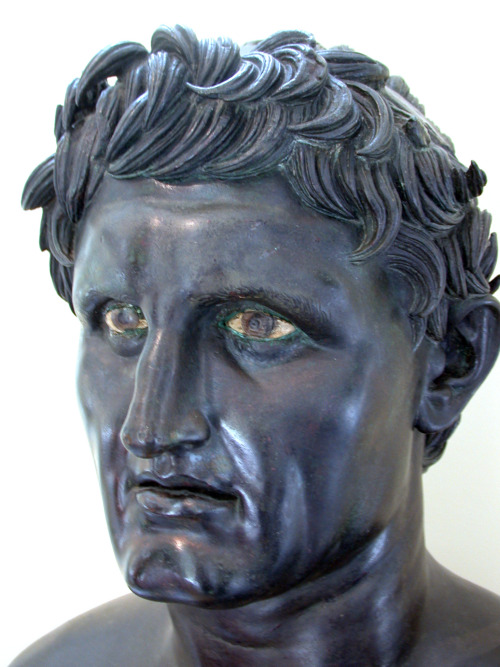
Seleucus I Nicator, Hellenistic ruler and founder of the Seleucid dynasty. Roman bronze copy after
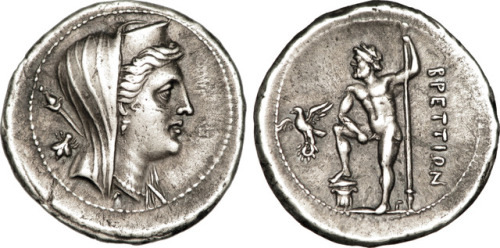
Drachma from Bruttium (Locri or Croton). On the obverse, Hera Lacinia; on the reverse, Zeus with hi
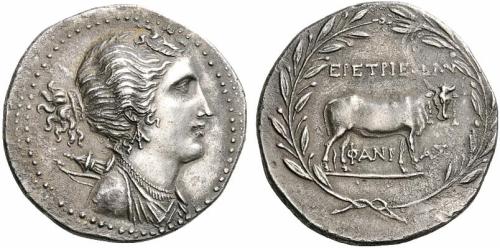
Stephanophoric silver tetradrachm of the Euboean polis of Eretria. On the obverse, a bust of Artemi
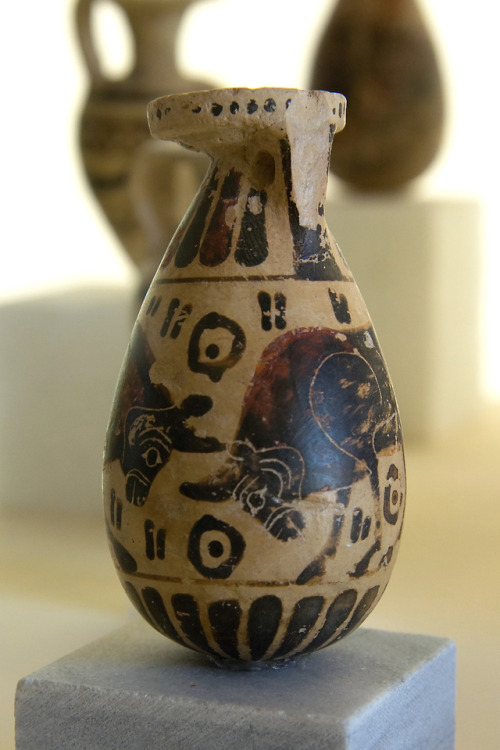
Two bulls face one another in combat. Protocorinthian or Early Corinthian aryballos, attributed to
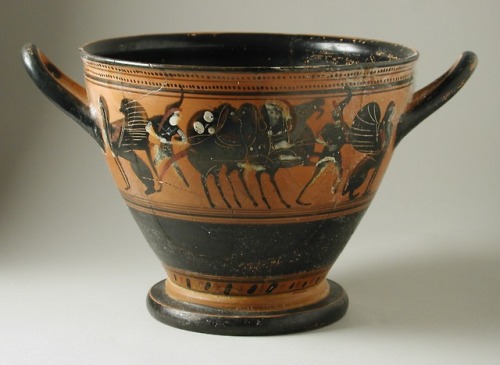
Attic black-figure skyphos (two-handled wine-cup), decorated with chariots, Amazons, and Sphinxes.
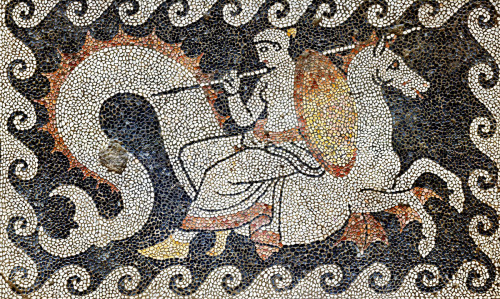
The goddess Thetis, riding a hippocampus (seahorse), delivers newly forged arms to her son Achilles.
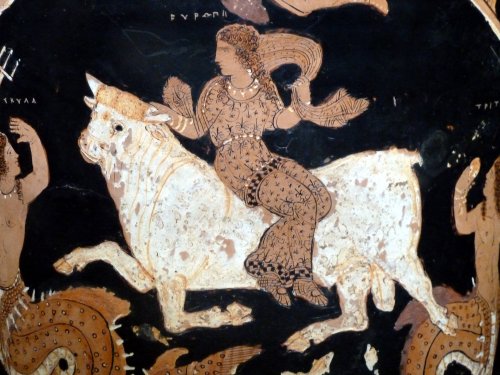
Zeus, in the form of a white bull, abducts Europa. Detail from a red-figure calyx-krater signed by
A bust of the Emperor Augustus. Unknown Roman artist, late 1st cent. BCE- early 1st cent. CE. Foun
A woman sneaks a drink from a vessel while a young servant girl looks on. Attic red-figure skyphos,
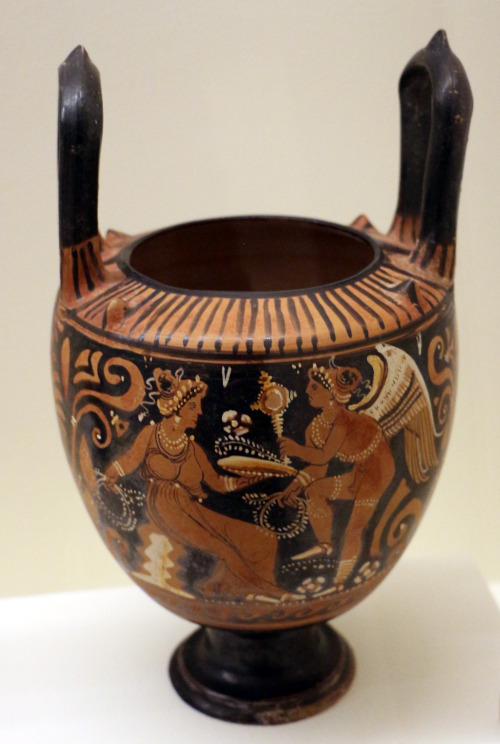
Apulian red-figure lebes gamikos (marriage vase) depicting Eros with a seated woman. Artist unknown
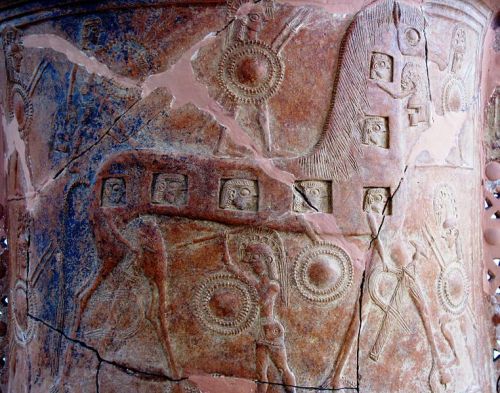
fyeah-history:Detail showing the oldest known depiction of the Trojan Horse. (Note the warriors peek
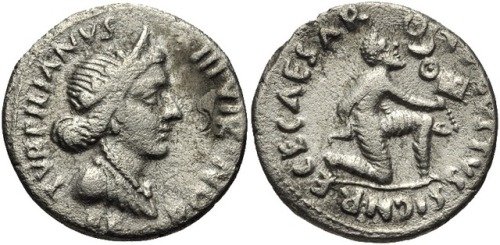
Denarius of the Roman emperor Augustus (r. 27 BCE-14 CE), commemorating the return of the legionary
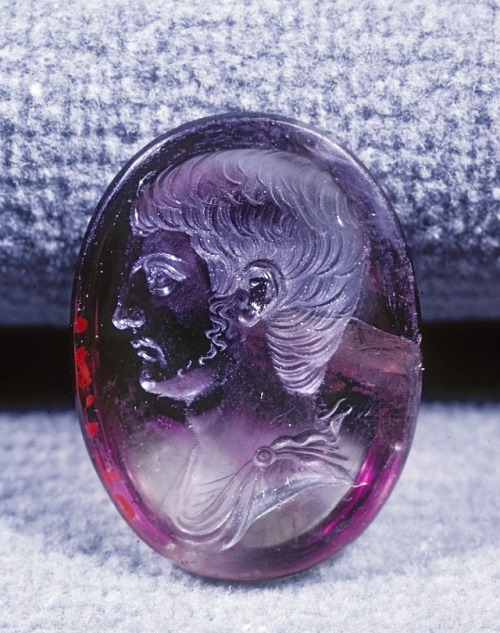
Glass intaglio of a member of the Julio-Claudian imperial family. Artist unknown; 1st or 2nd cent.
Hellenistic copper-alloy bust of a man, thought by some scholars to depict Philip V of Macedon (r. 2
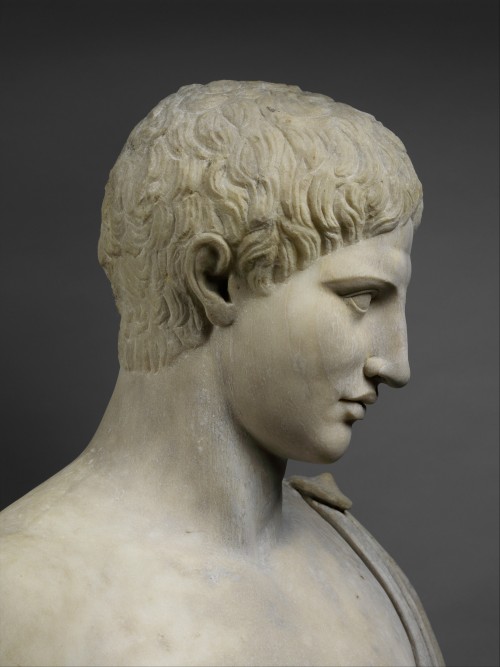
Statue of Hermes,carved from Pentelic marble. Roman-period copy (1st or 2nd cent. CE) after a lost
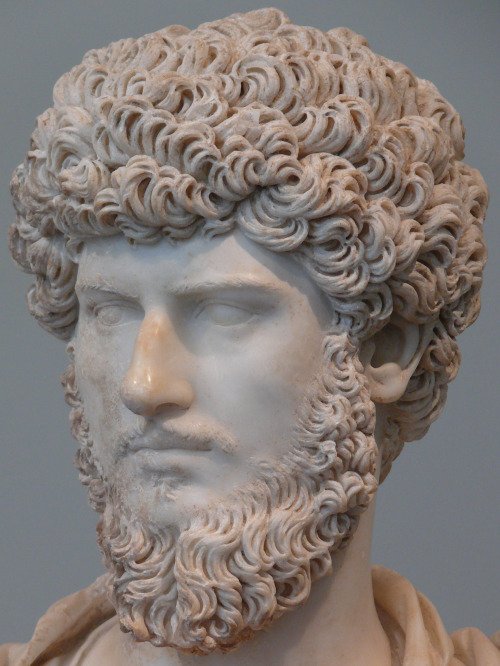
Marble bust of the Roman emperor Lucius Verus (r. 161-169 CE, jointly with Marcus Aurelius). Now in
The Calydonian Boar Hunt. Attic black-figure amphora, variously attributed to a painter of the Tyrr
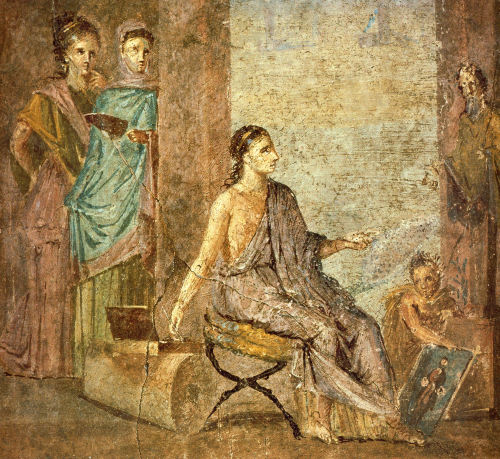
A woman paints a statue of Priapus. Fresco from the House of the Surgeon, Pompeii.
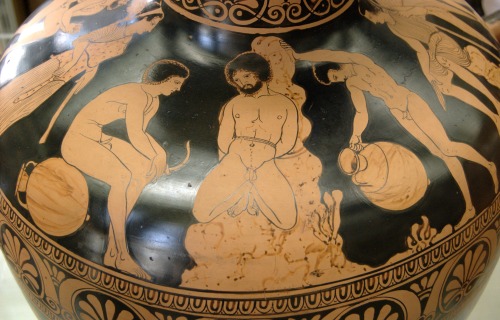
Amycus, king of the Bebryces, is bound by the Argonauts after losing a boxing match to Polydeuces.
Small bronze figurine of a wreathed male figure, possibly the god Apollo. An inscription on the leg
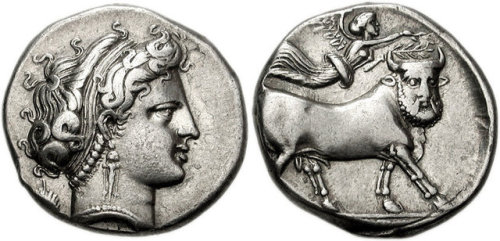
Silver didrachm of the polis of Neapolis (Naples) in Magna Graecia (south Italy). On the obverse, a
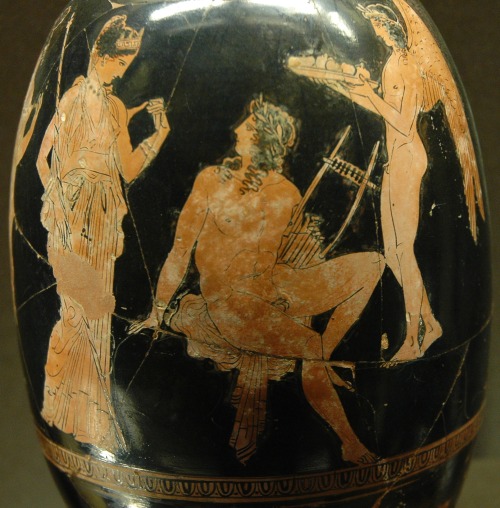
Aphrodite and Adonis. Attic red-figure squat lekythos, signed by the painter Aison; ca. 410 BCE. N
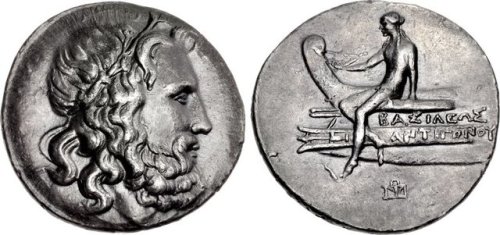
Tetradrachm of the Hellenistic monarch Antigonus III Doson (r. 229-221 BCE). On the obverse, the wr
Prev Page
Next Page